- Your cart is empty
- Continue Shopping


Advanced Restorative Materials Today
-
admin
- Posted on
- 0 comments
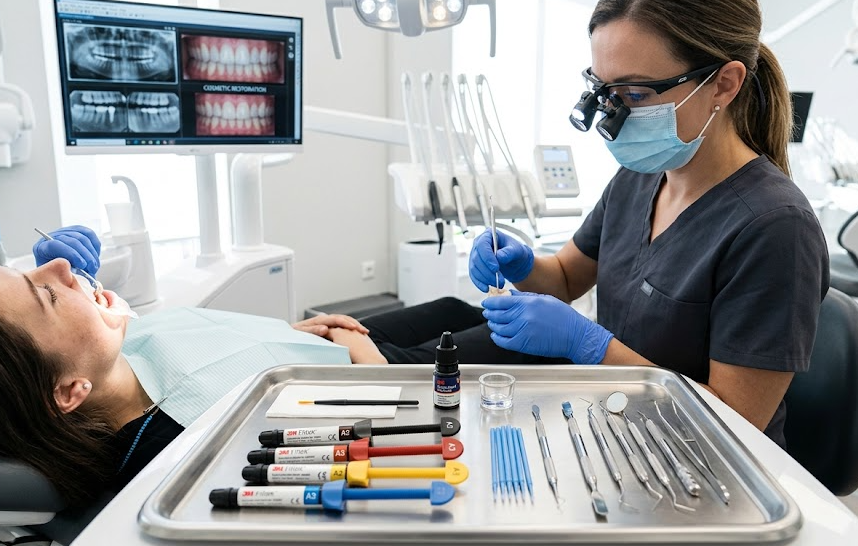
Restorative dentistry has experienced remarkable advancements over the last few decades. Modern dental professionals now have access to highly sophisticated materials that offer improved aesthetics, superior strength, enhanced durability, and simplified clinical workflows. These innovations allow dentists to provide treatments that not only restore function but also deliver natural-looking results that meet the growing expectations of patients.
As technology continues to evolve, advanced restorative materials are playing a critical role in improving treatment outcomes and supporting minimally invasive dental procedures.
The Evolution of Restorative Dentistry
Traditional restorative materials served an important purpose in dental care, but they often came with limitations related to aesthetics, wear resistance, and long-term durability. Modern restorative materials have been developed to overcome these challenges by incorporating advanced resin technologies, optimized filler systems, and improved bonding capabilities.
Today’s materials are designed to offer predictable performance while maintaining the natural appearance of the patient’s dentition. This combination of functionality and aesthetics has transformed restorative dentistry into a highly precise and patient-centered discipline.
Nanohybrid Composite Technology
Nanohybrid composites have become one of the most widely used restorative materials in modern dentistry. By combining nano-sized particles with conventional filler technology, these materials provide an ideal balance between strength and aesthetics.
Dentists appreciate nanohybrid composites for their excellent handling characteristics, superior polishability, and long-lasting gloss retention. Their ability to closely mimic natural enamel makes them suitable for both anterior and posterior restorations.
Key advantages include:
- Exceptional aesthetic appearance
- High mechanical strength
- Excellent wear resistance
- Superior polish retention
- Reliable long-term performance
Microhybrid Composites for Everyday Restorations
Microhybrid composites remain a popular choice among dental professionals due to their versatility and durability. These materials offer strong physical properties while maintaining acceptable aesthetic results for a wide range of clinical applications.
Their balanced composition allows practitioners to use them confidently in both functional and cosmetic restorations. As a result, microhybrid composites continue to be a dependable solution for routine restorative procedures.
The Benefits of Flowable Composites
Flowable composites have revolutionized many restorative techniques by providing enhanced adaptability and ease of placement. Their lower viscosity enables them to flow into small preparations, irregular surfaces, and difficult-to-reach areas.
Modern flowable materials feature improved filler content and mechanical properties, making them suitable for a broader range of clinical situations than ever before.
Benefits include:
- Easy placement
- Excellent cavity adaptation
- Reduced void formation
- Improved handling
- Enhanced clinical efficiency
Bulk-Fill Technology: Faster and More Efficient Restorations
Bulk-fill composites represent one of the most significant innovations in restorative dentistry. Unlike traditional composites that require incremental layering, bulk-fill materials can be placed in larger increments while still achieving adequate polymerization.
This technology reduces treatment time, simplifies clinical procedures, and increases productivity without sacrificing restoration quality.
Advantages include:
- Reduced chairside time
- Simplified restorative workflow
- Deep curing capability
- Reliable physical properties
- Improved patient comfort
Advances in Dental Adhesive Systems
The success of restorative procedures depends heavily on effective bonding. Modern universal adhesives have transformed adhesive dentistry by providing strong and reliable bonds to both enamel and dentin.
These advanced bonding systems are designed to simplify clinical protocols while maintaining excellent bond strength and long-term durability. Their versatility allows them to be used in a variety of restorative techniques and treatment approaches.
Specialized Restorative Materials
Beyond traditional composites, modern dentistry utilizes a range of specialized restorative materials developed for specific clinical needs.
Examples include:
- Core build-up materials
- Temporary crown and bridge materials
- Gingival barrier resins
- Orthodontic bonding composites
- Light-cure protective materials
These products enhance treatment predictability and allow clinicians to address complex cases with greater confidence and precision.
Improving Aesthetics and Patient Satisfaction
Today’s patients expect restorations that are virtually indistinguishable from natural teeth. Advanced restorative materials are specifically engineered to provide lifelike translucency, color stability, and excellent polishability.
As aesthetic dentistry becomes increasingly important, the ability to deliver natural-looking restorations has become a key factor in patient satisfaction and treatment success.
Modern materials help dentists achieve:
- Natural tooth appearance
- Accurate shade matching
- Long-lasting aesthetics
- Enhanced patient confidence
- Improved clinical outcomes
The Future of Restorative Materials
Research and development continue to drive innovation within restorative dentistry. Future materials are expected to offer even greater strength, improved biocompatibility, enhanced wear resistance, and smarter clinical applications.
Emerging technologies may introduce materials with antibacterial properties, self-healing capabilities, and even greater aesthetic performance. These advancements will further improve the quality of care available to dental patients worldwide.
Conclusion
Advanced restorative materials have transformed modern dentistry by providing clinicians with highly effective solutions for a wide range of restorative procedures. From nanohybrid composites and flowable materials to universal adhesives and specialized restorative products, today’s innovations support better clinical outcomes, greater efficiency, and improved patient satisfaction.
By staying informed about the latest developments in restorative materials, dental professionals can continue delivering exceptional care while meeting the evolving demands of modern dentistry.
